

A math game coming soon to iOS

Math, but it
plays like a game.

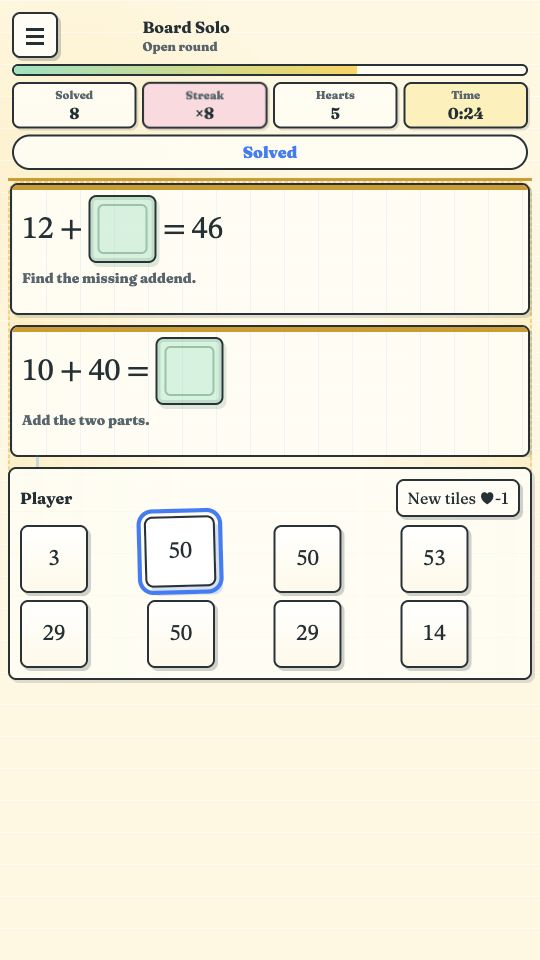
Board Together: Math Practice turns equations into a tile puzzle. You get a rack of numbers and operators, a few equations with blanks, and a short clock. Drag a tile in, the line checks itself, and the next one slides up. Play on your own, or split the rack with someone and solve together.

Download on the App Store Coming soon How it plays

note: Built first around shared iPad play. Coming soon to iOS.

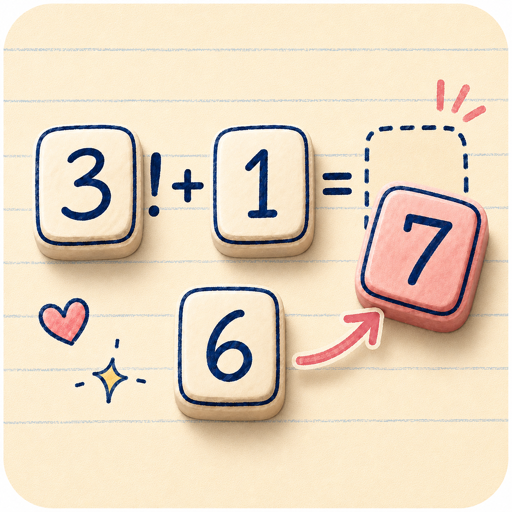
The Board Together app icon: hand-drawn number tiles on notebook paper reading three plus one equals seven, with a tile being dragged into the blank
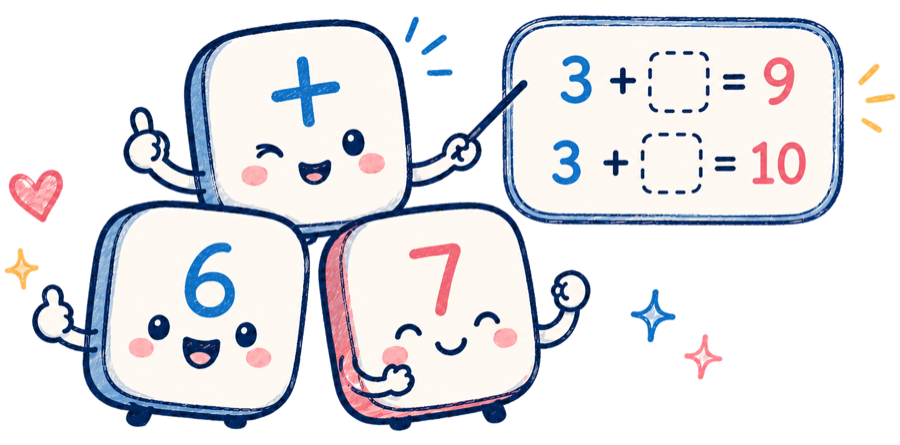
Three smiling number-tile characters, a plus, a six, and a seven, next to a card showing two equations with blanks
drag · solve · solve together
On the page

What a round looks like.

Four moments from real play: a solo run mid-clock, a shared board with a trade in progress, mixed-level lanes, and the summary at the end.

Solo Rush screenshot: three equations with blank tiles, a score of 1,240, a three-streak, three hearts, a 1:24 clock, and a rack of eight number and operator tiles along the bottom
Solo Rush
Shared board screenshot for two players: two tile racks, a shared set of equations, a trade tray in the middle, and assist bonuses for solving together
Shared board
Mixed-level lanes screenshot: player two solving algebra in the top lane and player one solving arithmetic in the bottom lane, with a note reading different difficulties, one shared score
Mixed-level lanes
Round summary screenshot: a team score of 4,250, eighteen solved, a best streak of seven, one mistake, ninety-five percent accuracy, and a per-player breakdown with bonus badges
Round over
The idea

Tiles, blanks, a clock.

Tap a tile, drag it into a gap, complete the line. The whole game grows out of that one move. Here is the rest of it.

Ways to play

Built first for iPad. Up to two people.

Solo Rush

One player against the clock. Eight tiles in the rack, three equations to fill, five hearts, 120 seconds. Solve as many as you can, then try to beat that number next time.

Co-op Shared Board

Two people, one iPad, the same equations. You both reach into the same board, so you split the easy lines and gang up on the hard one. One score for the team.

Co-op Individual Lanes

Each player gets their own equations at their own level. A grown-up can run algebra in the top lane while a kid runs addition in the bottom one, and every solve still adds to one team total. This is the part we are proudest of.

Versus

Same split layout, separate scores. You each keep your own count and race. Set the two sides to different levels on purpose if the match needs a handicap.

Practice, no pressure

Every mode has a Practice switch that turns off the timer and the hearts and lets you exchange tiles for free. It is the gentle way in for a first game or a younger player.

Levels, not labels

Pick what to practice, from counting and addition up through fractions, algebra, and a stretch into high-school and college topics. The picker calls them Level groups, so nobody feels parked in kid mode.

Real math, checked locally

Every board is checked on the device against answers a person wrote and tested. Nothing is graded by a guessing model. If your line is true, it counts, even when it is not the one we expected.

Works offline

No account to make, no ads, no analytics, no sign-in. Scores and settings stay on your device. The whole thing runs in airplane mode.

Made to be read

Write the page in one of three handwriting faces, including a high-legibility one. Bigger type and reduced motion are there for whoever wants them.

The whole point

Two people, two levels, one score.

The reason this game exists is the second player. Plenty of math apps sit a kid alone in front of a screen. Board Together puts two people next to each other and lets them play at different levels without anyone feeling left behind. Cover a lane, trade a tile, watch the team number climb. When the round ends, the summary shows what each person did and the one score you built together.

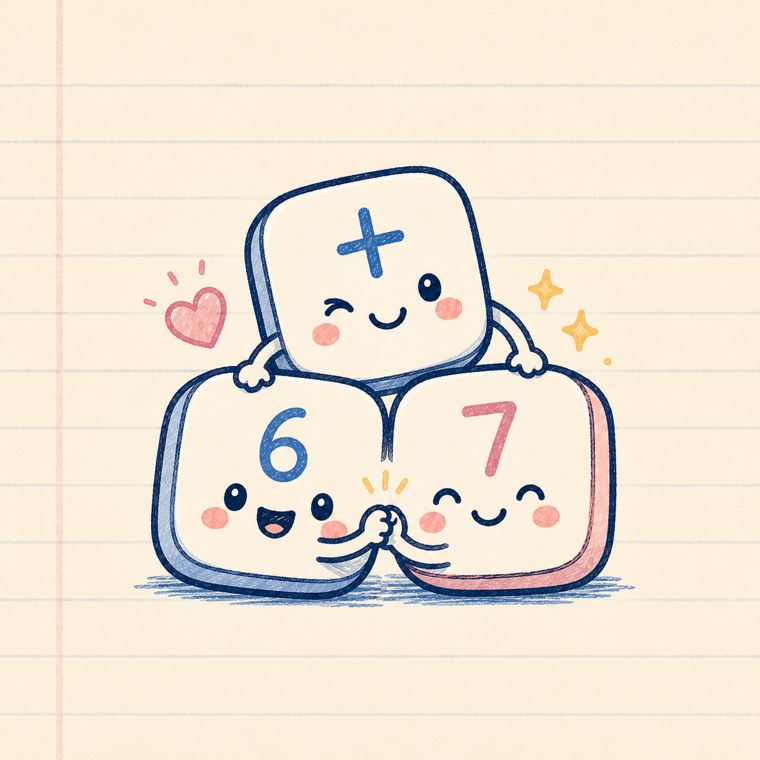
Three number-tile characters, a plus, a six, and a seven, leaning on each other in a friendly stack on notebook paper
Why we built it

Less worksheet. More table game.

Most math apps feel like homework with a progress bar stapled on. We wanted the other thing: a quick game you pick up for two minutes, play next to a kid or a friend, and actually want to run again. The math is real and it has to be right. The rest is just tiles, a clock, and the small satisfaction of dropping the last piece into place.

Questions or ideas Reach us at

Same inbox as the rest of the studio.